Preview

Architecture, Construction, Transport

Advanced search

The scientific journal "Architecture, Construction, Transport" of open access is devoted to the consideration of a wide range of theoretical and practical issues aimed at solving problems in the field of architecture, construction and transport, and is designed to unite the efforts of researchers, experts and practitioners in searching answers to major aspects.

Our target audience is a diverse international group of readers: academics, staff and students of higher education institutions (professors, lecturers, postgraduates, students), as well as specialists and experts in construction, architecture, and transport from scientific, educational, and other organizations.

The journal "Architecture, Construction, Transport" is included in the List of peer-reviewed scientific publications in which the basic results of the candidate's or doctoral theses in the following specialties should be published:

2.1.1. Building structures, buildings, and facilities (engineering sciences)

2.1.2. Bases and foundations, underground structures (engineering sciences)

2.1.3. Heat supply, ventilation, air conditioning, gas supply, and illumination (engineering sciences)

2.1.4. Water supply and sanitation, construction systems for water resources protection (engineering sciences)

2.1.5. Construction materials and products (engineering sciences)

2.1.8. Design and construction of roads, subways, airfields, bridges, and transportation tunnels (engineering sciences)

2.1.9. Structural mechanics (engineering sciences)

2.1.11. Theory and history of architecture, restoration and reconstruction of historical and architectural heritage (architecture, engineering sciences)

2.1.12. Architecture of buildings and structures. Creative concepts of architectural activity (architecture, engineering sciences)

2.9.5. Road transport operation (engineering sciences)

Also, the editors accept for publication materials on specialties:

2.5.5. Technology and equipment for mechanical, physical and technical processing (engineering sciences)

2.5.6. Mechanical engineering technology (engineering sciences)

Indexation of publication: included in the Russian project RISC, indexed in the international database DOAJ, ROAD, in the All-Russian Institute for Scientific and Technical Information of the RAS database, presented on the Lens.org and Semantic Scholar platforms, in the open database of scientific literature OpenAlex, full texts of articles are posted in the "CyberLeninka" scientific electronic library, on the RCSI Journals Platform.

The journal participates in the international CrossRef project, including using the CrossMark service to maintain the content it publishes and to alerting readers to changes if and when they occur.

Languages of publications: Russian, English.

Scientific articles are published in the journal for free.

Access to all articles is open. The journal adheres to the Budapest Open Access Initiative.

Articles are distributed under the Creative Commons Attribution 4.0 International License.

The Journal is registered in the Federal Service for Supervision of Communications, Information Technology and Mass Media. Registration number: PI No. FS77-80657 dated from 07.04.2021.

Current issue

Vol 6, No 2 (2026)
View or download the full issue PDF (Russian)

ARCHITECTURE

8-32 24
Abstract

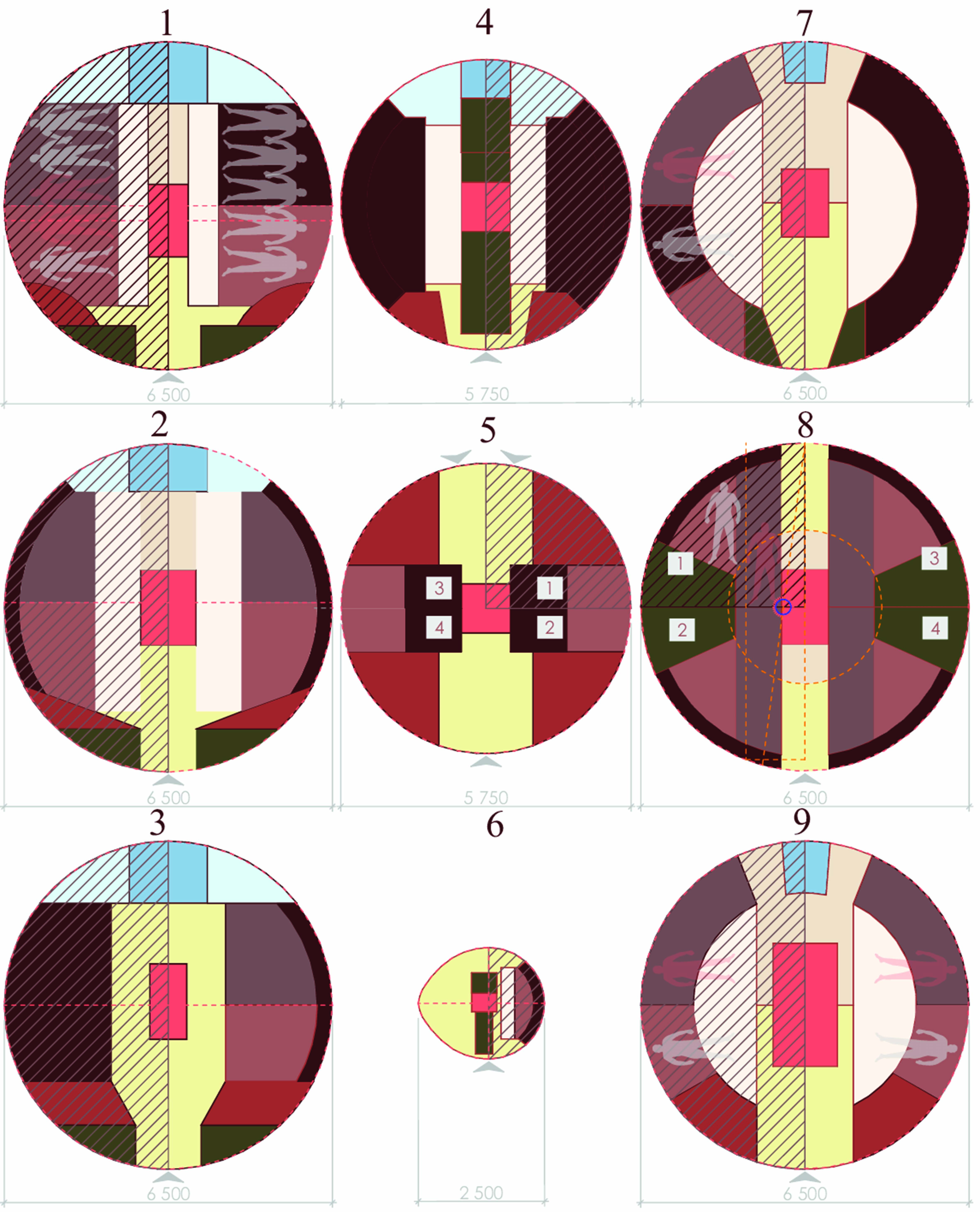
Portable dwellings of indigenous peoples of the North (Nenets, Nganasans, and Dolgans) have been investigated using the multidisciplinary approach, revealing the correlation between vernacular architectural features and the natural-climatic conditions, economic structures, and cultural and symbolic representations of the ethnic groups studied. This study not only makes a significant contribution to the understanding and preservation of unique ethno-cultural heritage, but also allows for the consideration of ethno-architectural experience in adapting traditional architectural solutions to contemporary challenges, particularly in the spheres of tourism and education. This approach corresponds with the stated priorities of the Russian Federation, concerning the preservation of the nation’s historical and cultural heritage. Research results: 1) a typological analysis of the dwellings of indigenous peoples of the North was conducted; 2) the correlation between ethno-architectural solutions and the climatic conditions and landscape of their habitats, as well as the cultural and daily life traditions of the studied people, was established; 3) the integration of vernacular architectural principles from the portable dwellings of Northern peoples into contemporary educational (e. g., creating educational platforms based on nomadic camps) and tourism (e. g., developing ethnic tourism) infrastructure was proposed. The authors envision the following areas for future research: analyzing the population of indigenous peoples of the North and its demographic dynamics over the next 15 years; modeling the impact of environmental and socio-economic changes on the morphological development of portable dwellings of Northern peoples using artificial intelligence; analyzing the evolution of vernacular architecture; and analyzing ethno-architecture within the bionic approach.

33-47 14
Abstract

The study of the technological determination of architectural form within contemporary construction production has identified the interrelationship between the development of construction technologies, digital design, materials science, and the formation of architectural objects. It provides a holistic understanding of how technological factors influence architectural form and determines their key role in its transformation in the 21st century. Analysis of parametric design features, digital production, new structural systems, and their impact on the spatial organization of buildings leads to the conclusion that technologies are not merely an auxiliary tool for realizing design concept but are a fundamental factor in architectural form generation. Throughout the study: 1) the theoretical foundations of the technological determination of architectural form were established, manifesting at the structural, material, production, digital, economic, and environmental levels; 2) factors influencing the transformation of architectural form were formulated, including the development of new structural systems, the application of innovative building materials, digital design, and algorithmic form generation; 3) contradictions within architectural practice under technological determination were identified: the risk of diminishing architecture’s artistic significance as a distinct form of spatial art, the dependence of architectural form on technological trends, and the problem of standardization in digital form generation. In the context of the digital transformation of the construction industry, architectural form is the result of the interaction between engineering, manufacturing, and algorithmic factors.

48-65 18
Abstract

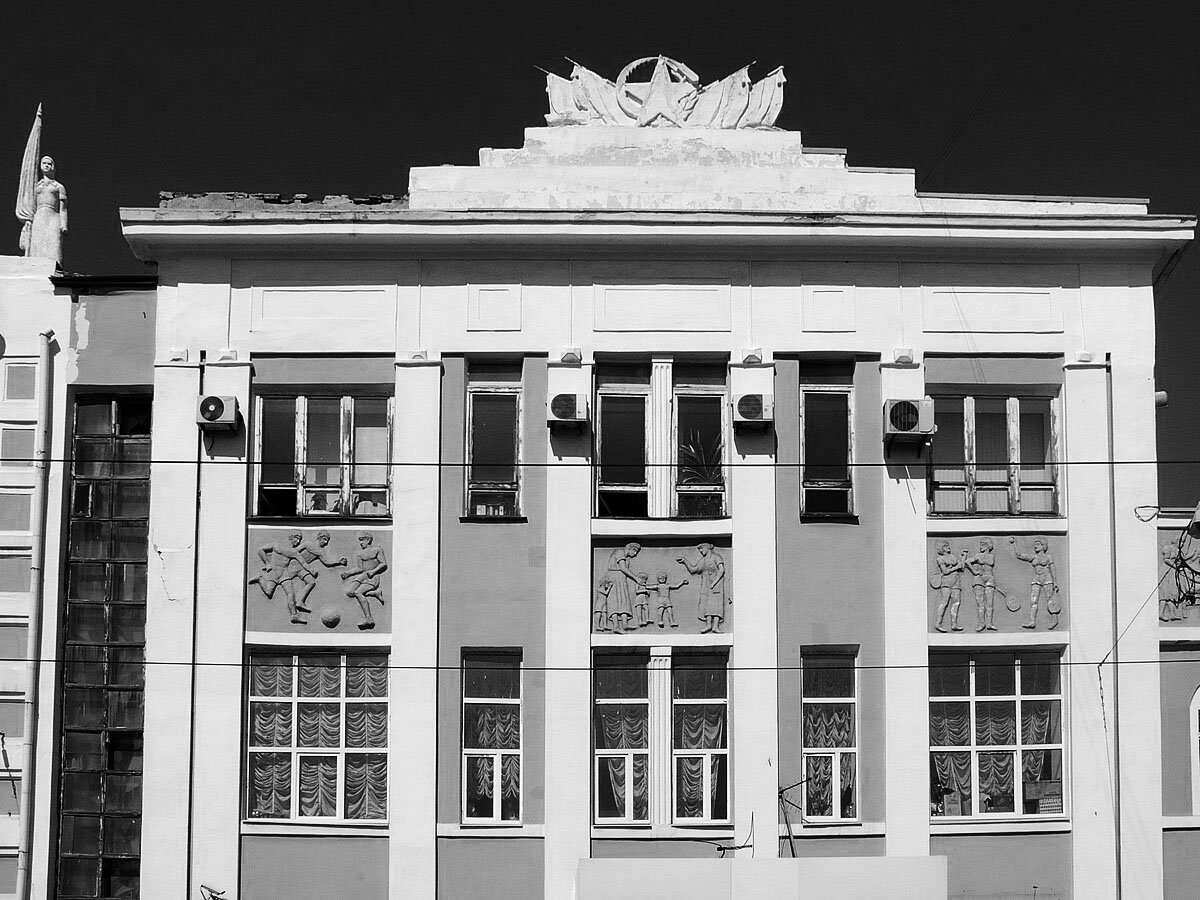
This article investigates a transitional period in the architecture of the Samara (Kuibyshev) region: the transformation of constructivism into post-constructivism during the 1930s. The key stylistic changes of this period are analyzed, such as the rejection of radical functionalism and the austerity of constructivism in favor of classical forms, monumentality, and decorativeness. The aim of this work is to identify and comprehensively analyze the stylistic features and regional characteristics of post-constructivism in Samara’s (Kuibyshev) architecture during the 1930s. The research is based on the study of archival materials and scholarly literature, as well as a typological and comparative analysis of key buildings. The results show that in the 1930s, during a period of active residential and public construction, post-constructivist buildings in Samara (Kuibyshev) combined the functional basis and spatial volumes of constructivism with elements of classical architecture, such as classical order details, rustication, accentuated portals, sculptural decor, and symmetrical compositions. These architectural solutions reflect the search for a new, more "stable" and representative image of the Soviet city, corresponding to the paradigm shift from the expression of revolution to the representation of state stability. The evolution from constructivism to post-constructivism in the Samara (Kuibyshev) region reflects nationwide Russian trends but demonstrates local characteristics. These trends are characterized by moderate decoration, an emphasis on functional logic in composition, and the use of local materials. Post-constructivism in Samara (Kuibyshev) became an important stylistic compromise that paved the way for the subsequent development of the Stalinist architecture in the region.

CONSTRUCTION

66-81 24
Abstract

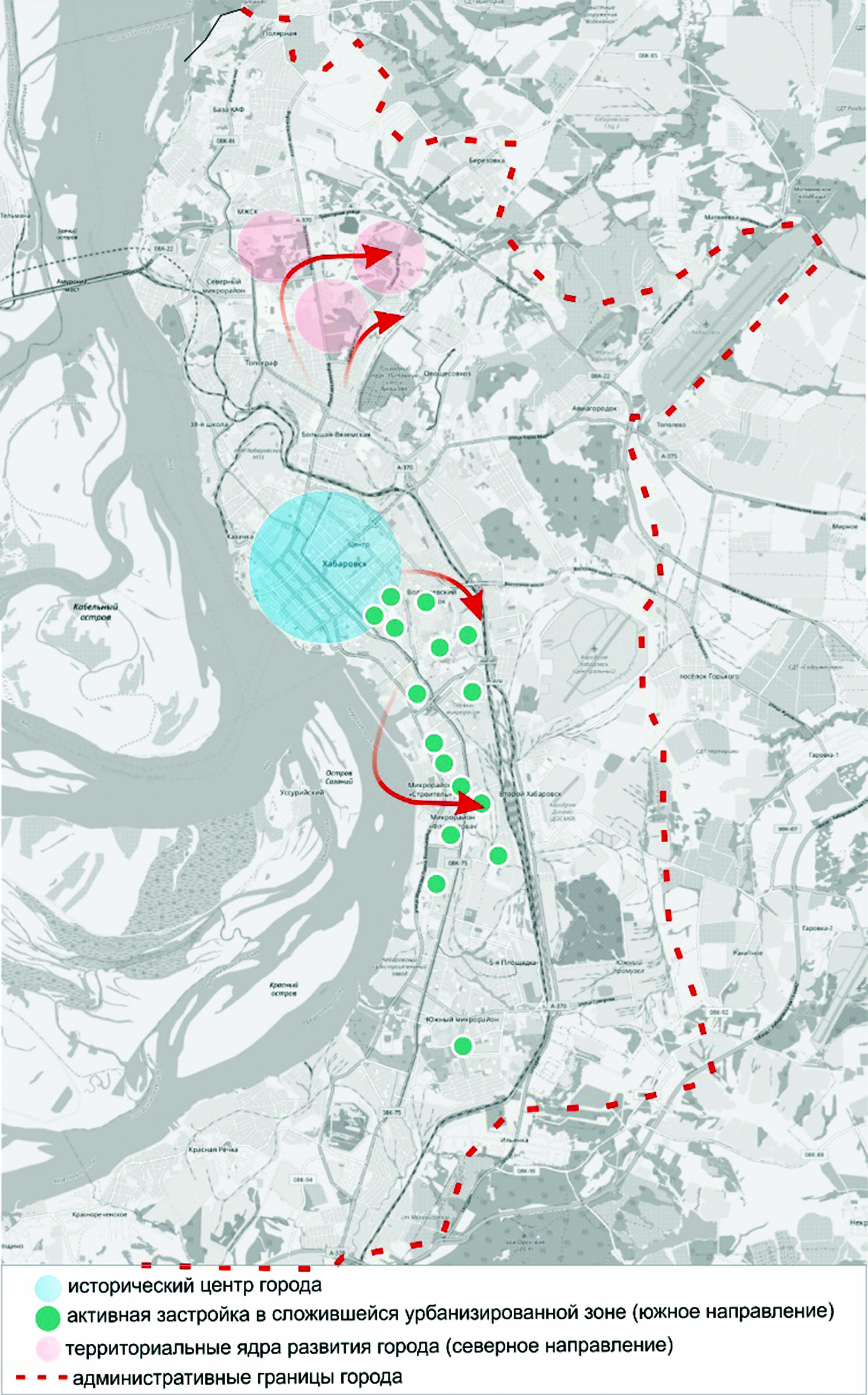
This study analyzes the effectiveness of housing programs (the Far Eastern mortgage, Family mortgage, and the "Far Eastern hectare" program) and their impact on the territorial development of the Far Eastern Federal District between 2021 and 2025. The relevance of this research stems from the need to enhance housing policy effectiveness in the Far East, where demand stimulation measures do not always lead to sustainable territorial development. The aim of this work is to assess the impact of regional programs and subsidies on housing construction dynamics and spatial settlement structure between 2021 and 2025, as well as on the architectural characteristics of newly constructed housing. The analysis is based on data from the Federal State Statistics Service (Rosstat), DOM.RF reports, and urban planning documentation, employing methods of comparative analysis and cartography. A comparative analysis of the main housing programs in the Far Eastern Federal District was also conducted, identifying differences in their objectives, implementation mechanisms, and spatial consequences. While the Far Eastern mortgage stimulates the comprehensive development of new territories in large cities, the "Far Eastern hectare" program promotes settlement diversification, but without systematic infrastructure support. It was found that from 2021 to 2024, housing completion increased by 18.1%; however in 2025 stagnation was observed, with a decline in the Amur and Sakhalin regions. The case of Khabarovsk illustrates how housing programs have become an instrument for the formation of new urban cores (e. g., the "Severniy" and "Orekhovaya Sopka" microdistricts), confirming the emergence of a polycentric spatial structure. However, infrastructure development lags behind the pace of construction. An analysis of the architectural characteristics and typology of modern infill residential development in Khabarovsk has also revealed a demand for a synthesis of functionality, energy efficiency, and aesthetics, aimed at creating a high-quality urban environment. The findings suggest the necessity of shifting from demand stimulation to ensuring sustainable supply through land preparation with engineering infrastructure and strengthening public-private partnership mechanisms. These results can be used by government agencies and developers in planning housing construction in a strategically important but logistically and demographically challenging region.

82-99 22
Abstract

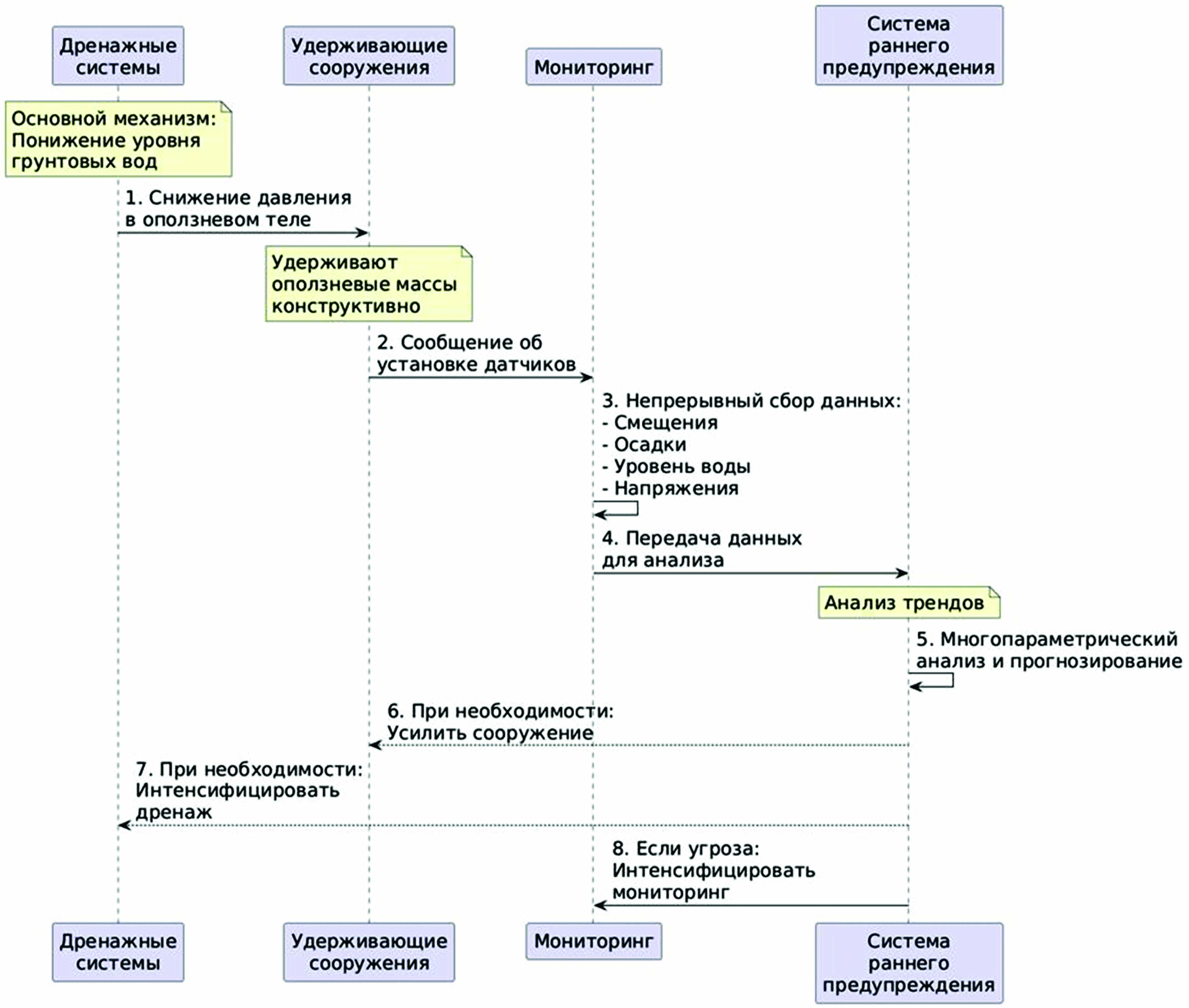
Landslide processes pose a serious threat to reclaimed land. Typically, existing approaches to landslide protection do not account for the specific of hydro-reclamation systems, creating a conflict between regulating soil moisture regimes and ensuring slope stability. The aim of this study was to develop a concept for the systemic integration of anti-landslide measures with land improvement practices, based on the methodology of systems analysis and synthesis. The research analyzes the landslide life cycle – from the latent stage to the critical stage – and identifies the types of protective measures corresponding to each stage. A key result of this study is the architecture of a regional information and analytical Decision Support System (DSS), that integrates three tiers of landslide risk management: operational (an early warning system based on soil moisture data, with a lead time of up to 24 hours), tactical (planning measures for periods up to one year), and strategic (risk and program management for 1–5 years). A scheme for integrating anti-landslide and land reclamation systems is proposed, based on the creation of a unified drainage network and coordinated groundwater level management to maintain it below the sliding surface. The scientific novelty of this work lies in substantiation a methodology for selecting an optimal suite of protective measures that considers not only geomechanical factors, but also the objectives of agricultural land reclamation. The practical significance lies in the fact, that implementing the proposed concept will enhance the efficiency of engineering protection, reduce the tehnogenic load on slopes, and optimize costs through the integration of anti-landslide and hydroreclamation measures. The obtained results are intended for direct application in the development of design and working documentation concerning the engineering protection of territories for capital construction projects located on sloping areas.

100-113 18
Abstract

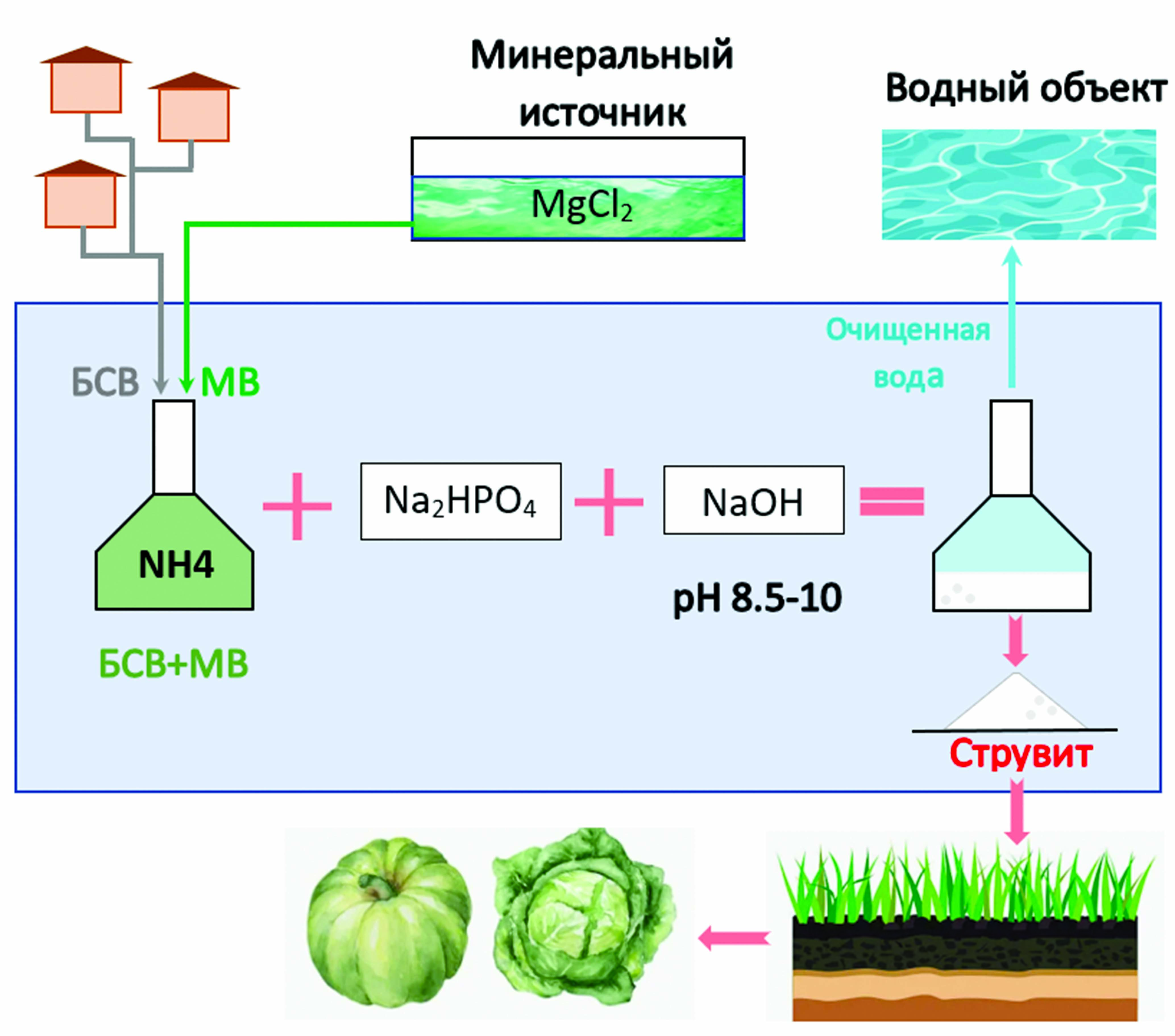
Thermal resorts face the challenge of disposing of not only domestic wastewater but also significant volumes of used mineral water. The most critical aspect is the removal of ammonium ions (NH4) from the water, as they subsequently lead to eutrophication of water bodies. A study on the combined treatment of domestic and mineral wastewater was conducted using chemical precipitation, resulting in the production of a complex agricultural fertilizer – struvite. Optimal conditions and reagent doses (sodium hydrophosphate, magnesium chloride, and sodium hydroxide) were determined to reduce ammonium ion concentration in the water to established regulatory standards and achieve a struvite yield of 5.35 g/dm3. Diluting ammonium-containing domestic wastewater with mineral water reduced magnesium chloride consumption by 80%. A technical and economic analysis indicated that cost savings could amount to 3.000–4.000 rubles per m3 of treated water, and the profit generated from selling the fertilizer could partially offset wastewater disposal coasts.

Announcements

2026-04-08

Конкурс строительных достижений Тюменской области ждет участников

Дан старт конкурсу «На лучшее достижение строительной отрасли Тюменской области». В этом году он пройдет в юбилейный 25 раз.

More Announcements...


Creative Commons License
This work is licensed under a Creative Commons Attribution 4.0 License.